

ECOWAS, Sweden Deepen Relations to Strengthen West Africa’s Resilience Architecture. By Raymond Enoch
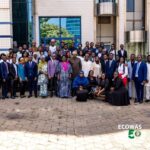
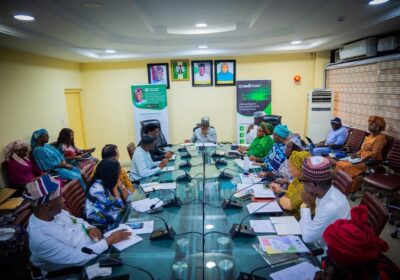
The enduring partnership between the Economic Community of West African States (ECOWAS) and the Government of Sweden has taken a bold step forward, as both sides convened a high-level strategic meeting in Abuja to reinforce resilience-building efforts across West Africa.
Held at the ECOWAS Commission Annex, River Plaza, the meeting underscored a shared mandate: to equip West African nations with stronger systems, institutions, and community-based mechanisms capable of withstanding shocks ranging from climate change and food insecurity to conflict and displacement.
The Swedish delegation, led by Mr. Joachim Beijmo, Head of Development Cooperation in Africa at the Embassy of Sweden in Ethiopia, was received by Dr. Sintiki Tarfa Ugbe, Director of Humanitarian and Social Affairs, who represented Professor Fatou Sow Sarr, ECOWAS Commissioner for Human Development and Social Affairs. Also present was Ms. Reshmi Theckethil, Project Manager of the Sahel Resilience Project from the United Nations Development Programme (UNDP).
At the heart of the discussions was the Sahel Resilience Project — a flagship initiative supported by Sweden and implemented in collaboration with UNDP and ECOWAS. Over the years, the project has moved beyond emergency responses to focus on long-term resilience systems, strengthening institutions, improving disaster preparedness frameworks, and enhancing regional coordination.
Speaking at the meeting, Dr. Ugbe expressed deep appreciation for Sweden’s steady and strategic support to Sahel countries and ECOWAS Member States. She noted that Sweden’s backing has not only strengthened policy development but has also enhanced ECOWAS’ capacity to coordinate regional responses in fragile contexts.
She reaffirmed ECOWAS’ commitment to implementing the Regional Resilience Strategy for West Africa (2024–2050), recently adopted by the ECOWAS Council of Ministers. According to her, the strategy represents a shift from reactive crisis management to proactive resilience-building — ensuring that communities are better prepared before shocks occur.
Mr. Beijmo, in his remarks, commended ECOWAS for providing leadership in driving a regional resilience agenda that aligns humanitarian action with sustainable development. He acknowledged the technical progress made under the Sahel Resilience Project, particularly in strengthening institutional capacities and creating systems that attract and guide investments into resilience-building initiatives.
He further emphasized Sweden’s confidence in ECOWAS’ ability to sustain the momentum, especially in emerging areas such as recovery preparedness and urban resilience — sectors increasingly critical as West Africa experiences rapid urbanization and climate-related challenges.
Beyond diplomatic formalities, the meeting reaffirmed a practical and results-oriented relationship. Technical teams from ECOWAS’ Humanitarian Affairs and Disaster Risk Management Division presented measurable achievements, including improved early warning mechanisms, enhanced disaster risk governance structures, and strengthened coordination platforms among Member States.
The renewed collaboration reflects a broader understanding that resilience in West Africa is not a standalone project but a continuous regional commitment — one that requires political will, technical capacity, and trusted partnerships.
As West Africa navigates complex and overlapping crises, the ECOWAS–Sweden partnership stands as a strategic pillar in the region’s resilience architecture — translating global solidarity into tangible support for vulnerable communities across the Sahel and beyond.