

ECOWAS, AfDB IN STRATEGIC TALKS TO EXTEND WEST AFRICA’S INTEGRATION ROADMAP By Raymond Enoch
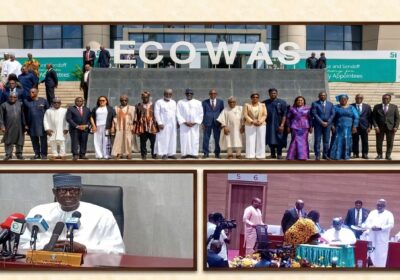
Abuja, Nigeria became the nerve centre of West Africa’s economic future this week as the Economic Community of West African States (ECOWAS) and the African Development Bank (AfDB) opened high-level talks to extend the Regional Integration Strategy Paper (RISP) for West Africa (2020–2027).
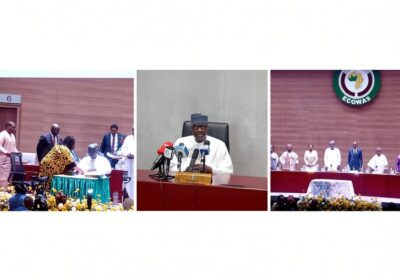
The closed-door, three-day consultation meeting, holding from February 4 to 6, 2026 at the ECOWAS Commission Headquarters, brought together top decision-makers from both institutions to retool and sustain the region’s integration agenda beyond the initial lifespan of the strategy, which ended in December 2025.
At the heart of the discussions is the need to keep momentum alive on regional projects that cut across borders and directly impact millions of West Africans — from highways and power pools to trade facilitation, agriculture, and industrial development.
Opening the meeting, AfDB’s Director General for West Africa, Mr. Lamin Barrow, made a strong case for extending the RISP, describing it as a “critical backbone” for ongoing and future operations between the Bank and ECOWAS.
According to him, without an extended framework, the Bank’s ability to roll out new regional programmes would be significantly constrained.
“This extension is not just procedural,” Barrow stressed. “It is essential to sustain investments that promote integration, competitiveness, and shared prosperity across West Africa.”
In his welcome address, the President of the ECOWAS Commission, H.E. Dr. Omar Alieu Touray, praised the African Development Bank for its long-standing and wide-ranging support to the sub-region. He highlighted AfDB’s role in key sectors such as agriculture, transport and energy infrastructure, trade and customs modernisation, capacity development, health, education, and industrial growth.
Dr. Touray noted that the consultation comes at a critical time, as ECOWAS intensifies efforts to deepen regional integration amid economic headwinds, security challenges, and global uncertainty.
Paradigm News International gathered that the outcome of the Abuja meeting could shape the direction of regional cooperation in West Africa for years to come, determining how development financing aligns with ECOWAS’ vision of a more connected, resilient, and prosperous sub-region.
As deliberations continue, expectations are high that the extended RISP will not only bridge policy gaps but also unlock fresh funding windows for transformational regional projects that touch the everyday lives of West Africans.