

Building Trust, Restoring Confidence: Strengthening Unity Towards Fulfilling the Mission and Ministry of the Church By Raymond Enoch
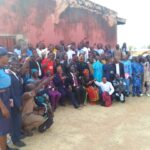
In Mutum Biyu, Gassol Local Government Area of Taraba State, history quietly but decisively shifted as leaders, clergy, and faithful of the United Methodist Church Nigeria (UMCN) gathered for a moment many had prayed for but few believed would come so soon.
The Forgiveness, Reconciliation and Healing Workshop, held on 19–20 January 2026, was more than a meeting—it was a collective reckoning with the past and a deliberate step toward a shared future.
At the heart of this pivotal engagement was Bishop Dr. Innocent Rubiruka Solomon JP+, Chairman, Peace Commission, Taraba State, whose presentation set the moral, spiritual, and practical tone for what participants described as a defining moment in the Church’s long journey from division to unity. Drawing from scripture, lived experience, and global peacebuilding lessons, Bishop Solomon offered not just analysis, but direction—anchored in truth, humility, and hope.
Addressing a diverse audience of district pastors, church leaders, men, women, and youth, Bishop Solomon acknowledged a reality many institutions struggle to confront: conflict is inevitable. From politics to religion, leadership to identity, conflict has shaped societies and institutions across history. Yet, he argued, conflict does not have the final word. Citing examples from apartheid South Africa, the Rwandan genocide, and ecclesiastical crises within Nigeria and beyond, he emphasized that even the most entrenched divisions can yield to dialogue, forgiveness, and intentional reconciliation.
Turning pointedly to the United Methodist Church Nigeria, Bishop Solomon spoke with the authority of one who has walked the road with the Church through its most turbulent seasons. He traced the roots of the UMCN crisis—from ethnic tensions and leadership struggles to theological divides that culminated in schism and violence, particularly in parts of Taraba State following the 2024 breakaway. His words neither trivialized the pain nor assigned blame lightly. Instead, they called the Church to courageously confront its wounds.
Anchoring his message in Matthew 6:14–15 and 2 Corinthians 5:18–20,
Bishop Solomon described reconciliation as both a divine mandate and a demanding human process. He reminded participants that reconciliation is not a quick fix, nor can it be imposed. It requires time, sincerity, humility, and a willingness to change attitudes, emotions, and long-held assumptions. Most importantly, it demands commitment from individuals and communities alike.
Forgiveness, he stressed, is not weakness but obedience. It releases burdens, ends cycles of bitterness, restores joy, and entrusts justice to God. In a Church once fractured by labels and mistrust, forgiveness becomes the doorway through which healing enters and unity is rebuilt.
Bishop Solomon’s voice carried particular weight because of his unique position at the intersection of faith and governance. Having worked closely with the first Bishop of UMCN, Rt. Rev. D. P. Dabale, and having chaired reconciliation efforts under the Christian Association of Nigeria in Taraba State, he has been privy to critical decisions taken by both church and government in attempts to resolve the crisis.
Now, as Chairman of the Peace Commission in Taraba State, he described his involvement in the UMCN reconciliation process as not optional, but a national and moral responsibility.
Against this backdrop, his affirmation of the Church’s present trajectory resonated deeply. With the election of Bishop Ande Emmanuel, Bishop Solomon observed that the UMCN is clearly transitioning from a conflict era into a post-conflict phase defined by peace, reconciliation, forgiveness, and healing. He pointed to tangible signs of progress, including joint annual conferences, inclusive leadership appointments, and renewed cooperation across previously divided factions.
Declaring that the days of a fractionalized UMCN are over, Bishop Solomon urged participants to tell their stories, forgive offenders, embrace one another, worship and work together freely, and envision the future collectively. Leadership, he reminded the gathering, comes from God—and supporting it through prayer, unity, and service is essential to fulfilling the mission and ministry of the Church.
As the workshop drew to a close, what lingered was not merely the content of a presentation, but the weight of a shared resolve.
In Mutum Biyu, the United Methodist Church Nigeria did more than revisit its past—it recommitted itself to a future of unity. And standing firmly within that moment was Bishop Dr. Innocent Rubiruka Solomon JP+, a steady bridge between memory and hope, whose contribution continues to shape peacebuilding within the Church and beyond.