

BARROW MAKES HISTORY: FIRST-EVER LAND ALLOCATION FOR GAMBIA PRESS UNION SINCE INDEPENDENCE By Raymond Enoch In a landmark gesture that will resonate through The Gambia’s democratic history, President Adama Barrow has announced the allocation of land for a permanent headquarters of the Gambia Press Union (GPU) — the first such commitment by any government since the country gained Independence. The historic announcement was made during the 2025 Presidential Media Dinner at the State House, an annual forum that brings together the nation’s leadership and the media in dialogue. The declaration drew strong attention from journalists and observers alike, signaling a defining moment for media development and press freedom in The Gambia. President Barrow said the move reflects his administration’s recognition of the media as a critical pillar of democracy and a partner in national development. By allocating land for the GPU’s permanent home, the government has taken a concrete step beyond rhetoric, reinforcing its commitment to a strong, professional, and independent press. The decision has been widely welcomed as a major boost to the institutional growth of the media sector. It marks a sharp departure from decades of unmet aspirations, finally addressing a long-standing demand of journalists across generations. Responding to the announcement, the Gambia Press Union praised the improved relationship between the government and the media since the 2017 democratic transition. Delivering the GPU’s statement at the dinner, Board Member Alieu Ceesay described the land allocation as a breakthrough achievement and a fulfillment of a 46-year-old dream. According to Ceesay, the planned National Press Bantaba will house the GPU Secretariat, the Media Academy for Journalism and Communication (MAJaC), GPU affiliates, and the Media Council of The Gambia. He noted that the facility will serve as a hub for professional training, self-regulation, and media development, strengthening journalism standards nationwide. The GPU also highlighted other gains recorded under the current democratic dispensation, including the passage of the Access to Information Act 2021 — a landmark law initiated by the Union itself — which has enhanced transparency and citizens’ right to information. However, the Union struck a balanced note by flagging persistent and emerging concerns. Ceesay disclosed that while The Gambia maintained its 58th position globally in the 2025 World Press Freedom Index, it slipped from 10th to 11th in Africa. He attributed this to economic pressures on media houses, high taxation, the absence of comprehensive journalist safety mechanisms, and the slow implementation of the Access to Information Act. The GPU further expressed serious reservations about the Cybercrime Bill 2023, warning that some of its restrictive provisions, if passed in their current form, could undermine press freedom and reverse democratic gains. Despite these challenges, the Union reaffirmed its commitment to peace, stability, and responsible journalism. Ceesay emphasized ongoing GPU-led initiatives in conflict-sensitive reporting, hate speech prevention, fact-checking, and ethical journalism, while calling on the government to sustain its support for media development. The annual Presidential Media Dinner once again proved to be more than a ceremonial gathering. With President Barrow’s unprecedented land allocation to the GPU, the 2025 edition may be remembered as the moment when words of democratic commitment were firmly matched with action — setting a new benchmark for government–media relations in The Gambia.
In a landmark gesture that will resonate through The Gambia’s democratic history, President Adama Barrow has announced the allocation of land for a permanent headquarters of the Gambia Press Union (GPU) — the first such commitment by any government since the country gained Independence.
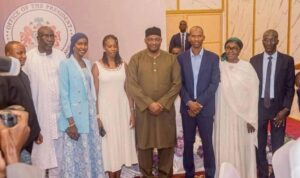
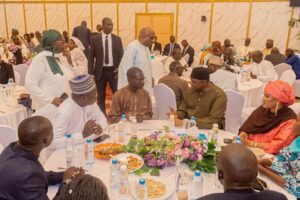
The historic announcement was made during the 2025 Presidential Media Dinner at the State House, an annual forum that brings together the nation’s leadership and the media in dialogue. The declaration drew strong attention from journalists and observers alike, signaling a defining moment for media development and press freedom in The Gambia.
President Barrow said the move reflects his administration’s recognition of the media as a critical pillar of democracy and a partner in national development. By allocating land for the GPU’s permanent home, the government has taken a concrete step beyond rhetoric, reinforcing its commitment to a strong, professional, and independent press.
The decision has been widely welcomed as a major boost to the institutional growth of the media sector. It marks a sharp departure from decades of unmet aspirations, finally addressing a long-standing demand of journalists across generations.
Responding to the announcement, the Gambia Press Union praised the improved relationship between the government and the media since the 2017 democratic transition.
Delivering the GPU’s statement at the dinner, Board Member Alieu Ceesay described the land allocation as a breakthrough achievement and a fulfillment of a 46-year-old dream.
According to Ceesay, the planned National Press Bantaba will house the GPU Secretariat, the Media Academy for Journalism and Communication (MAJaC), GPU affiliates, and the Media Council of The Gambia. He noted that the facility will serve as a hub for professional training, self-regulation, and media development, strengthening journalism standards nationwide.
The GPU also highlighted other gains recorded under the current democratic dispensation, including the passage of the Access to Information Act 2021 — a landmark law initiated by the Union itself — which has enhanced transparency and citizens’ right to information.
However, the Union struck a balanced note by flagging persistent and emerging concerns. Ceesay disclosed that while The Gambia maintained its 58th position globally in the 2025 World Press Freedom Index, it slipped from 10th to 11th in Africa. He attributed this to economic pressures on media houses, high taxation, the absence of comprehensive journalist safety mechanisms, and the slow implementation of the Access to Information Act.
The GPU further expressed serious reservations about the Cybercrime Bill 2023, warning that some of its restrictive provisions, if passed in their current form, could undermine press freedom and reverse democratic gains.
Despite these challenges, the Union reaffirmed its commitment to peace, stability, and responsible journalism. Ceesay emphasized ongoing GPU-led initiatives in conflict-sensitive reporting, hate speech prevention, fact-checking, and ethical journalism, while calling on the government to sustain its support for media development.
The annual Presidential Media Dinner once again proved to be more than a ceremonial gathering. With President Barrow’s unprecedented land allocation to the GPU, the 2025 edition may be remembered as the moment when words of democratic commitment were firmly matched with action — setting a new benchmark for government–media relations in The Gambia.