

Mahlamba Ndlovu Working Breakfast with CONTRALESA Places the National Question at Centre Stage By Godfrey Madanhire
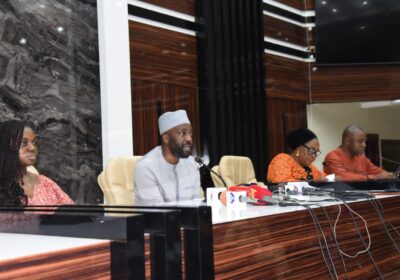
Pretoria’s Presidential Residence at Mahlamba Ndlovu carried the ceremonial weight of history on Friday, 5 December 2025, as President Cyril Ramaphosa welcomed the leadership of the Congress of Traditional Leaders of South Africa (CONTRALESA) for a working breakfast that sought to deepen dialogue between the state and traditional institutions. The delegation was led by CONTRALESA President, Kgoshi Mathupa Mokoena, whose presence gave the engagement both dignity and strategic clarity. At his side, Prince Zolani Mkiva, the Secretary General, presented a memorandum that placed before the Presidency urgent priorities of security, governance, funding and land.
The gathering drew a distinguished assembly. Princess Modiane Pilane and Makgoshi Masefako Dikgale lent regal dignity, while Kgosi Nyalala Pilane and Kgoshi Nkoane Malekane underscored the continuity of hereditary authority. Inkosi Siphosezwe Mahlangu, known for his forthright advocacy on rural governance, added depth to the dialogue. Reverend Zwo Nevhutalu brought a moral voice, while Brigadier Jan Stassen and Lieutenant General Khosi Senthumule reflected the responsibility of the security establishment.
The sombre reality of assassinations against traditional leaders framed the urgency of the meeting. Since 2019, more than seventy leaders have been killed, leaving communities destabilised and kingdoms weakened. The tragedy is illustrated by the fate of figures such as Chief Mhlabunzima Hlongwane of the KwaMhlabuyalingana Traditional Authority, ambushed while travelling in 2022, and Inkosi Simphiwe Cele of the Vukuzithathe Traditional Authority, who survived an assassination attempt in May 2025, though one person was killed. These incidents, though not formally tabled in the meeting, remain central to the national consciousness and underscore the urgency of the matter.
The memorandum called for state-provided security to protect traditional leaders, including risk assessments, protective details where warranted, and improved coordination between local stations and provincial commands. The Political Killings Task Team, originally designed to address politically linked murders, was noted in this context. Its disbandment by suspended Police Minister, Senzo Mchunu, in December 2024 remains under scrutiny by both the Parliamentary Ad Hoc Committee and the Madlanga Commission. The presence of Minister Firoz Cachalia, responsible for policing, underscored the relevance of his portfolio, as the protection of traditional leaders and the controversy surrounding the task team fall squarely within his mandate.
From security, the dialogue moved naturally to governance and resources. CONTRALESA advanced a comprehensive funding framework to stabilise Traditional Authorities. Proposals included direct budget allocations to Traditional Councils, uniform remuneration across provinces and the empowerment of Kingships and Royal Houses to lead catalytic infrastructure projects such as rural road upgrades, electrification and telecommunications expansion. A central policy proposal set out by CONTRALESA was the formal recognition of Traditional Leadership and Traditional Authorities as a fourth tier of governance. This tier would stand alongside national, provincial and local spheres, with defined mandates, budgets and accountability standards. The proposals were tabled in the presence of Minister Velenkosini Hlabisa, responsible for Cooperative Governance and Traditional Affairs, whose ministry is tasked with aligning resources with constitutional recognition.
Land was addressed with equal clarity. The memorandum recalled the 2017 Land Indaba in Boksburg where government and traditional leaders endorsed the transfer of communal land to Traditional Authorities within six months. Eight years later, that resolution remains unimplemented. CONTRALESA urged immediate action to restore custodianship to institutions that hold community trust, proposing a transparent transfer mechanism with registries, timelines and safeguards to prevent fragmentation and abuse.
The memorandum further affirmed that traditional leaders remain the first point of call in many remote areas, where state services are limited. Communities turn to their chiefs, kings and councils for dispute resolution, access to land and guidance on social matters, long before they reach government offices. Because these leaders carry the immediate burden of governance in places where the state is absent, CONTRALESA argued that their role must be professionalised and sustained. To achieve this, the organisation proposed access to medical aid, provident funds and pension schemes for traditional leaders and councillors. These measures were not framed as privileges but as instruments of institutional dignity, ensuring that those who serve at the frontline of rural life are supported with the same protections afforded to other public servants. In this way, recognition is matched by capability and the authority of traditional institutions is reinforced by continuity and care.
To appreciate the authority of CONTRALESA’s voice, one must recall its origins. Founded in 1986, in KwaNdebele, CONTRALESA emerged as a movement of resistance and reclamation, rising against apartheid’s attempt to marginalise traditional authority. It aligned with the United Democratic Front and the African National Congress, mobilising rural communities into the liberation struggle and ensuring that traditional leaders were not sidelined. In the democratic era, CONTRALESA secured constitutional recognition for Traditional Authorities, influenced the drafting of the Traditional Leadership and Governance Framework Act and championed the integration of indigenous leadership into modern governance. Importantly, CONTRALESA leadership was part of the CODESA negotiations and successfully persuaded delegates on the need for the establishment of the Houses of Traditional Leaders. These Houses exist today as a direct result of CONTRALESA’s struggle and vision. These were not mere wins, but historic victories of identity and endurance, achievements that transformed traditional leadership from a marginalised institution into a recognised pillar of the democratic state.
Throughout the engagement at Mahlamba Ndlovu, President Ramaphosa presided with attentiveness, listening as ministers and dignitaries contributed perspectives that underscored the breadth of the challenge and the shared responsibility to act. Kgoshi Mokoena’s leadership of the delegation framed the dialogue as a partnership imperative, reminding all present that coherence across security, institutional design, resourcing and land will determine whether communities experience real change.
The breakfast will be remembered as a dignified moment of renewed purpose between the state and traditional leaders. It brought urgent matters into sharp focus and carried the symbolism of Mahlamba Ndlovu, affirming traditional leaders at the centre of national dialogue.
At its heart, the engagement touched the National Question, the enduring challenge of building a nation that is united in diversity, just in its governance and dignified in its treatment of all communities. It asked how South Africa protects those who lead at the grassroots, how it integrates traditional authority into the architecture of the state and how it fulfils the unfinished promise of land and custodianship. These are not peripheral issues but defining objectives to secure dignity, achieve inclusion, balance modern and indigenous institutions as well as advance justice in the stewardship of resources. The breakfast showed that when state and tradition meet with seriousness of purpose, dialogue brings direction and a path to building stronger institutions backed by resilient communities.
Authored by His Excellency Ambassador Godfrey Madanhire,
Diplomatic Envoy of the State of the African Diaspora,
Chief Operations Officer, Radio54 African Panorama, Pan-Africanist and Advocate for Sovereign African Governance