

Strengthening Agricultural Data: FAO, World Bank, NBS Join FGN to Unveil National Agricultural Sample Survey (NASS) 2023.
By Raymond Enoch
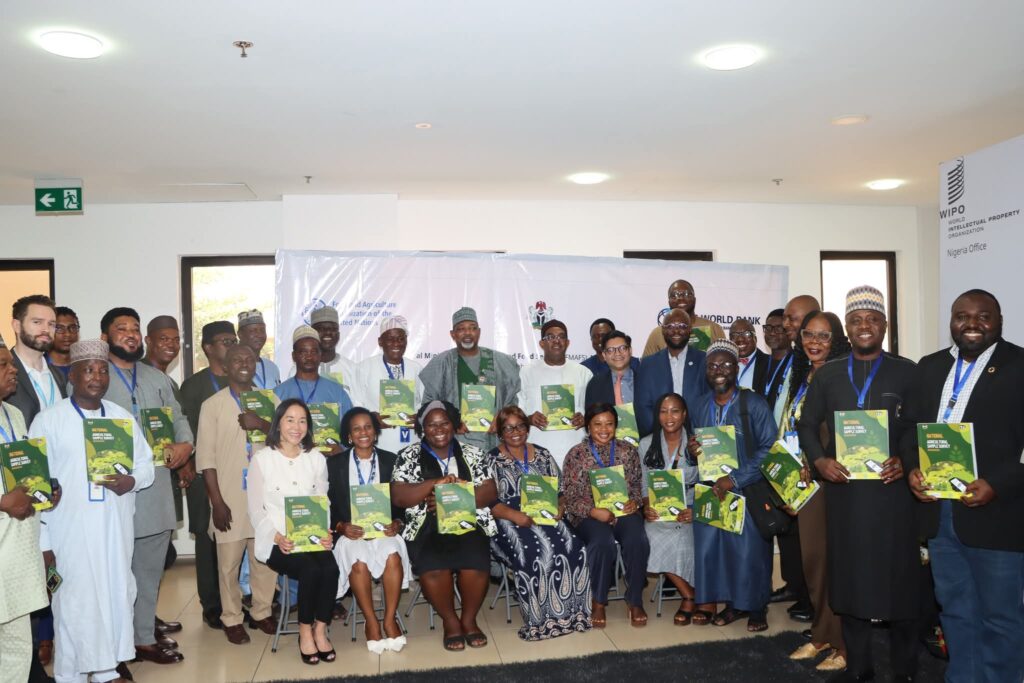
In a pivotal moment for Nigeria’s agricultural development, the Federal Government of Nigeria through the Federal Ministry of Agriculture and Food Security. National Bureau of Statistics (NBS) formally released the 2023 National Agricultural Sample Survey (NASS), a comprehensive national data report designed to reshape policy direction and boost food security efforts across the country.

The high-profile event brought together strategic partners led by the FAO Representative in Nigeria and ECOWAS, Dr. Hussein Gadain, who joined the Hon. Minister of Agriculture & Food Security, Senator Abubakar Kyari; representatives of the World Bank; senior officials of the Federal Ministry of Environment; and stakeholders under the global 50×2030 Initiative.
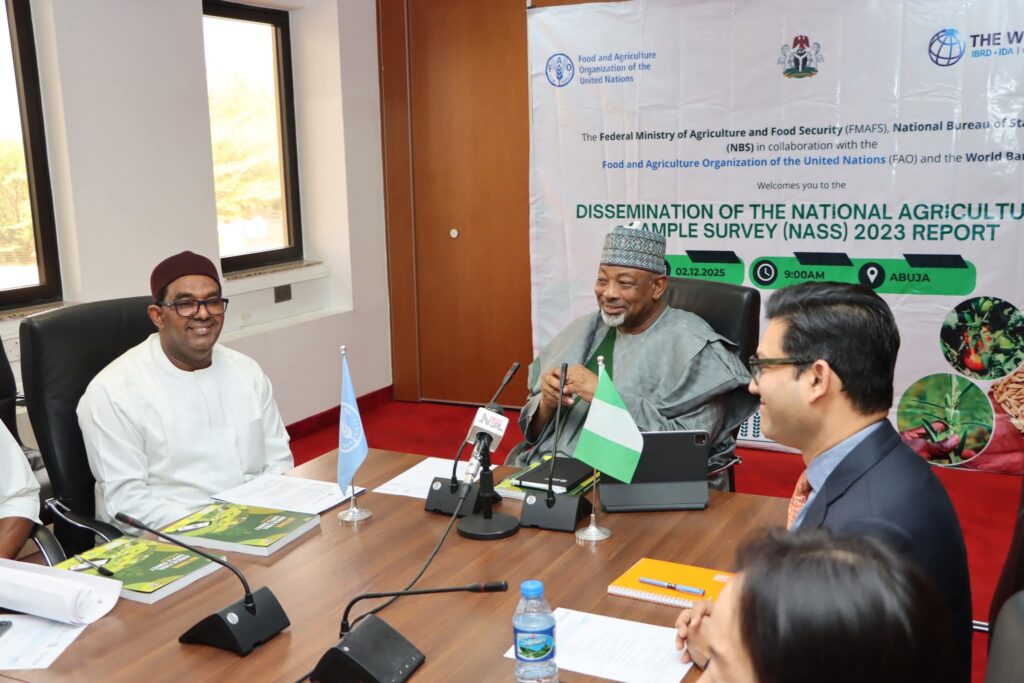
The release of NASS 2023 marks what experts describe as a critical step in restoring transparency, credibility, and innovation within Nigeria’s agricultural sector, which remains central to national economic growth and rural livelihoods. According to officials, the data provides government and development partners with the empirical foundation needed to design targeted interventions, track progress, and address enduring challenges such as low productivity, climate risks, and rising food prices.
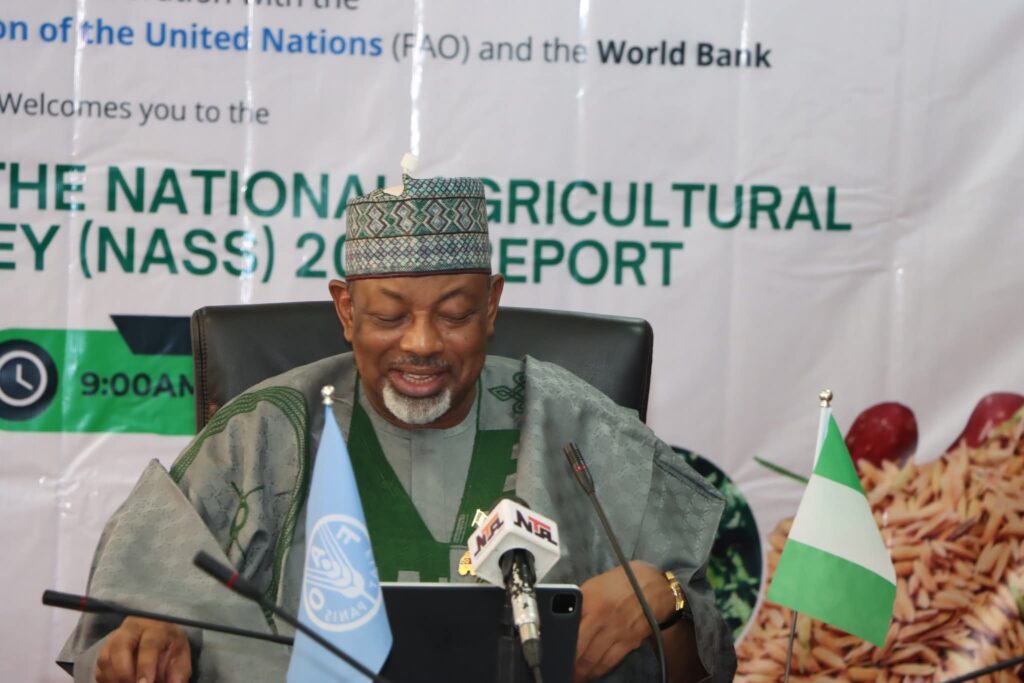
Dr. Gadain commended the collaborative effort behind the survey, stressing that reliable agricultural statistics are the backbone of smart agrifood policy. He emphasized that accurate data will help Nigeria unlock investment, modernize farming systems, and build resilience across crop, livestock, and environmental value chains.
Senator Kyari described the report as timely, arriving at a period when the Federal Government is intensifying reforms to secure affordable food for all Nigerians. He also acknowledged the role of strategic partnerships—including the World Bank and the 50×2030 Initiative—in strengthening research, monitoring, planning, and agribusiness development nationwide.
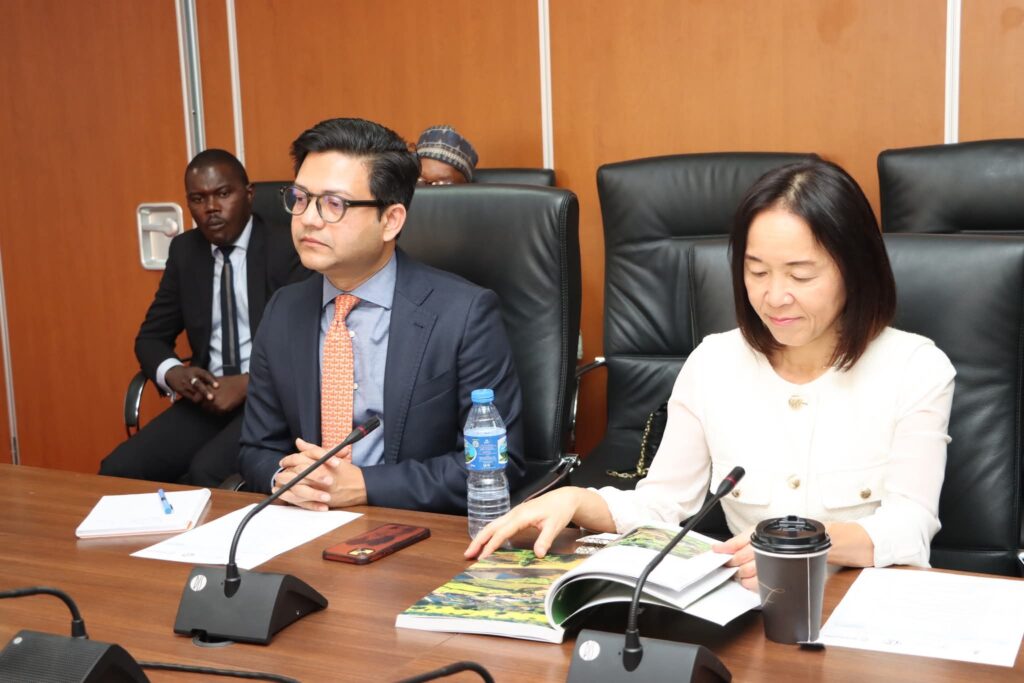
Analysts say the NASS 2023 findings will guide interventions not only at the federal level but also across state ministries, private sector actors, farmer associations, and international agencies. With agriculture accounting for a substantial share of employment and GDP, improved data systems are expected to inform investment decisions, enhance climate-smart farming practices, and support better pricing, market access, and rural development.
Program officials added that the release demonstrates Nigeria’s commitment to international best practices in agricultural governance, aligning with the FAO’s #4Betters agenda: better production, better nutrition, a better environment, and a better life.
As the nation grapples with rising food costs and climate pressures, today’s milestone offers a renewed sense of direction—facts before policy, science before speculation, and data before decisions—a shift stakeholders hope will transform Nigeria’s agricultural landscape by 2030 and beyond.